



Episode 41
Solving for Scale: Real-time Retail Experiences with Endear's CTO

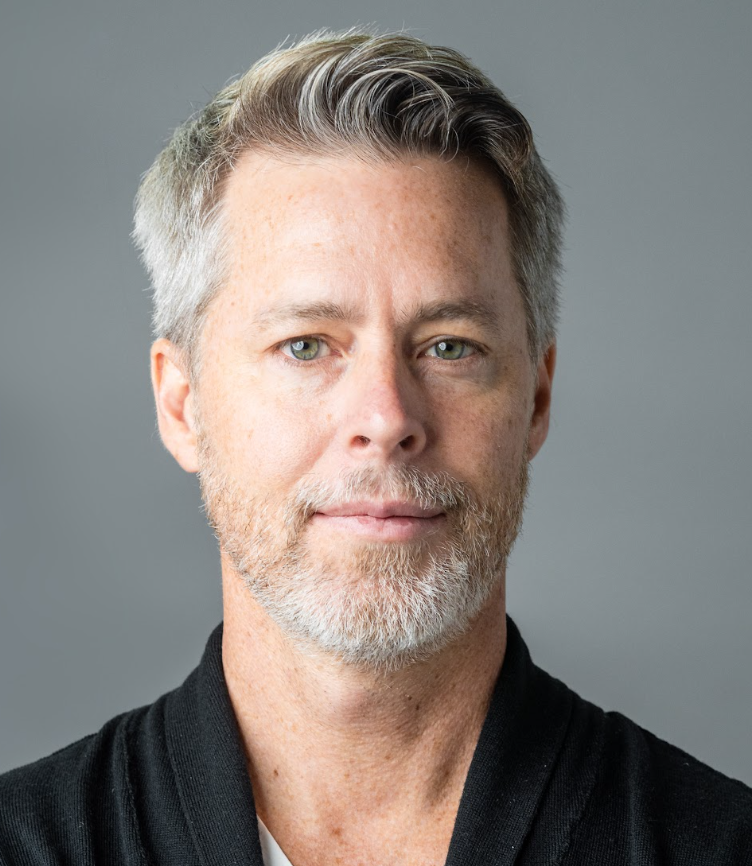
JP Grace
Endear



Major retailers from Allbirds to Alo Yoga to Glossier boost sales and increase customer loyalty with Endear’s CRM solution. To learn about the behind-the-scenes technology enabling omni-channel strategies for these large consumer brands, David Joy sat down with the company’s CTO, JP Grace.
Join as we discuss:
The intricacies of building and maintaining a robust infrastructure and data platform — from refining operating procedures to leveraging managed services.
Challenges and opportunities faced by CTOs — from the shift in mindset to prioritizing spending and building relationships with cloud platform companies.
The transformative potential of AI in B2C marketing and beyond.
David Joy:
What is up everyone, and thanks for tuning in.
In today’s episode of The Big Ideas in App Architecture Podcast, we speak to JP Grace, who is the CTO at Endear. JP and I talk about Endear, and how they’re building products that support their direct-to-consumer customers, and the challenges with omnichannel and retail niche.
We also get into his story from learning how to code to becoming a CTO, and the lessons that he has learned on the way, and all the other things that he’s excited for, like AI in B2C.
It’s a great episode filled with golden nuggets spread throughout. So hope you enjoy this episode.
Welcome to the Big Ideas in App Architecture Podcast, JP. How are you doing today?
JP Grace:
Doing great. Very excited. Thank you for having me, David.
David Joy:
You are a CTO at Endear, and we want to get into all of that, obviously. But before I butcher your introduction, I will let the people know who you are, what you do at Endear, and a little bit about your backstory.
JP Grace:
For the last 10 years, I’ve really been involved in all sorts of aspects of the startup technology space here in New York City. Marketing, media, omnichannel, retail, all kinds of different aspects of technology, and rolled all of that into what we’re doing here at Endear. Endear, jumping probably ahead a little bit, Endear is an omnichannel CRM designed for the ground up to help direct consumer brands to sell better.
David Joy:
These are the reasons why I was super excited to talk to you. First of all, you’ve got this great experience working in the startup space. You’ve been in tech developing stuff, and slowly you’ve grown into the role of leader.
And last time we spoke, you were telling me about how you had to choose how to make that switch when you were at the previous company. And now at Endear, when I was looking at the logos you work with, it’s so exciting. You get to work with Alo. And the reason why I know Alo is my wife is a huge fan of the brand. And then Purple, which is something that I’ve explored myself, trying to get bed and a pillow myself, and so many ads. And All Birds and such brands. And what these consumer brands offer to us is an experience that we are trying to seek for the products that we are trying to purchase. But then that last overall customer experience that you are providing as a company is super fascinating, and that’s really exciting to get into.
But before we dive into that a little bit, tell me a little bit about what made you choose a career in tech. I always love to ask this question, because I find that most of us were gamers, got into tech in the early ‘90. But tell me a little bit about you.
JP Grace:
I remember when I was in elementary school, being over at a buddy’s house and we took apart his stereo because we wanted to see all the pieces, and how they were connected, and what it looked like on the inside. And then as I got older and experimented with different things, I was always taking things apart and trying to understand how they worked. So back in the ’90s, it was very easy to, as it is today as well, to just right click and inspect the code and you could see how a webpage was made. And so that was my introduction to web development. And just making simple, silly fun projects for me and my friends throughout high school. Eventually went to college for it. It’s just always been something that I’ve been fascinated by and really just enjoy. It’s fun for me to understand how things work.
My dad makes fun of me every once in a while. When I was a kid, I was the one that would read the instruction manual for everything in the house. And so we got a new TV and I would literally read it front to back. Nobody reads the instruction manual front to back. But that was something that I did as a kid, because I wanted to understand how everything worked, what were all the different capabilities, and how could I really make the most of the TV, which was the coolest technology you could have as a ten-year-old in 1990.
David Joy:
I think that the curiosity to learn is so important. And as a child, once you get that, that is built into you. So you continue to have that ability. Now I have children, so I’m trying to tell my wife, “We don’t need to teach them as much as we need to tell them how much they need to be curious about learning.”
Let’s jump into a little bit more about Endear and what you guys are doing. Let me know, and the people know, about what does a day-to-day look for a CTO working at Endear? What are the main things that you are working on each day? And then probably from there on, we can get into what kind of products you work on and the way you build applications and products.
JP Grace:
The only thing that’s consistent is our daily standup with the tech team. Centering ourselves around any kind of blockers we’ve got going on, is typical standup activity. But really just making sure that everything that is important is front-of-mind, and that nobody is blocked from being able to get the most important thing done for them today.
Outside of that, my life really revolves around keeping the whole team centered on the most important priorities. So whether it is talking about our core principles and how everything that we do kind of relates to those on a daily basis, thinking about, a little bit further out, what is our quarterly plan for executing on the vision for where we think we need to be? And how does that tie into what we’re working on right now? Making sure that we’re always working on the highest value-add thing for our customers.
One of our first principles is ‘customer first’, and so making sure that we’re centered on adding value for our customers in a way that’s unique and differentiated, and making sure that we’re not focused on things that are undifferentiated and just not important to our customers.
David Joy:
What was interesting for me, when I was researching, was obviously trying to understand the way your platform is set up, and you’ve got CRM built into that. And one of the things I really liked about it was you spoke about how you segment and provide data that can be scaled for your users and customers. And you have sales chat, you have campaigns and business insights. These are very critical decisions that retail companies, who are customers, I’m a user of them, have to make really. So were these things already set up when you joined the company, or it’s been like a process of building a new platform altogether?
JP Grace:
So I’m very fortunate in that Janesh, one of our co-founders here at Endear, did a really good job of laying the foundation from a technology perspective, and staying focused on the customer and the problem that they had, so that when I joined, there wasn’t a tremendous amount of work to really lay the foundation for the next phase of the business.
We’re in a really good spot already, built on top of rock solid technologies, a lot of different managed services, that I’m sure you and a lot of your customers use every single day. That enabled us to stay focused on the core differentiating capabilities that our customers actually care about, and not maintaining clusters of compute and databases that are hard to manage, and all of these other things. It’s important for us to stay focused on the things that actually matter to our customers. And so that’s again what we’re trying to do on a daily basis.
Janesh, like I said, laid a great foundation for us. And so when I came on, what I was focused on initially was just making sure that we started to refine some of our standard operating procedures for things. So making sure that we had a little bit more automation in place for deploying things, making sure that Janesh was not a bottleneck to a lot of the developer’s path to production. He built a lot of our foundation, and so he knows how all of it works. And so getting a lot of that stuff out of his head and accessible to the rest of the team. We’ve done a lot of work around just recording him talking about various things, to make sure other people are ramped up and trained on various pieces of the application.
There’s a lot of different projects that I have helped to initiate here at Endear, but one of the things I’m grateful that I didn’t have to do was really sort out a lot of the foundation, because Janesh did such a good job here.
David Joy:
Tell me a little bit about what that infrastructure looks like for you right now, and how do you scale that for your customers? Is it a multi-tenant environment, eventually? How is it?
JP Grace:
Take a step back and describing it in technical terms, we’ve built a real-time streaming and batch processing data platform that allows us to pull in data from our customers, who are direct-consumer brands, from all of their different data silos. So you can imagine a brand is going to have the e-commerce platform, a point of sales system, they’ll have a marketing platform, a customer service platform, maybe a loyalty platform, and a bunch of other platforms. Maybe they have a data warehouse somewhere. They’ve got all of this data and it’s all disintegrated. And what we have to do is get that into our platform in real-time. So we’re pulling from all of these different data sources, however we can get them. We’re pulling from GraphQL endpoints, we’re pulling from rest endpoints, we’re pulling from CSV files, we’re pulling from webhooks, however we can get the data in, we’re pulling the data in as quickly and as real-time as possible.
We have a bunch of different capabilities around resiliency, redundancy, so we don’t lose any of the data. And so we are pulling this in constantly in real-time, and double checking everything to make sure that it’s coming in correctly. We have to store it in a number of different ways. It has to be indexed. We have to have backups of everything. And so that is the primary architecture that we have. It’s just both a real-time and batch processing streaming data platform. And so that’s the architecture that we’re operating on.
We are leveraging a bunch of different managed services. So we make heavy use of Pub/Sub, for example, which is a GCP capability for event-driven architectures. We lean heavily on that. From a DevOps perspective, we lean heavily on GitHub Actions. I’ve been using GitHub Actions for a really long time, and it’s great because it’s super easy, super low maintenance. It does what it needs to do and it’s really flexible. It certainly has its issues, and uptime is one of them. But for what we need it for, it’s good enough, and it allows us to focus on other things and not spend a bunch of bandwidth maintaining some elaborate DevOps architecture.
So again, really leaning into managed services and trying to automate as many different things as possible, trying to leverage best-in-class capabilities. We use a bunch of things written in Rust to make sure that we’re speeding things up and that the feedback cycle is as quick as possible. That’s the key for us, is getting feedback quickly to make sure that the things that we’re deploying are always in an operational state, and that our customers are able to give us feedback on the things that we’re deploying for them as quickly as possible.
David Joy:
So you spoke about, when you came in, there was this foundation that the team had already set up, and for you it was more about taking the company to the next level, make the process much more focused and spread out, and delegate it so that they’re not bottlenecks in the system. So you can grow through multiple sections. And that’s why I’m trying to envision that.
But tell me a little bit about how it was coming from ZX Ventures, where you were also involved in building really important omnichannel systems, and you drove some e-commerce strategy there. So what was the difference over there versus coming into this role?
JP Grace:
So at ZX Ventures, I had a role that kind of oversaw a lot of different businesses and making sure that they were applying best practices for their stage of maturity. You can imagine, I had dozens of different businesses and a portfolio that I was managing. And some of them were really, really small and early-stage and totally unvalidated from a product market fit perspective. And other ones were billion-dollar businesses. They had scaled up, seen a lot of success, and had a lot more sophisticated needs from a best practice perspective.
And so, it was really developing a lot of playbooks for when is it appropriate to adopt various security compliance automation capabilities within a team to ensure that they’re firing on all cylinders and delivering the most value possible for the number of people that they have, and the business that they’re driving? And so what I took away from that was really almost like an MBA in operating a startup tech team. And I got the opportunity to see what was successful, what wasn’t as successful, where were the challenges, and how could I… What I wanted to do in my next role was just apply all of those learnings to a single use case, and drive success within that use case.
And so I spent a bunch of time, coming out of ZX Ventures, really trying to make sure that I found the right fit for my experience. And I spent seven months interviewing a bunch of different founders and co-founders, and it wasn’t until I found Lee and Janesh that I knew I had found the perfect fit for myself, for a company that I wanted to be involved in, a product that I found really interesting. They were solving a lot of really interesting problems, and I knew that I wanted to be solving interesting problems, and it’s a lot of fun. We’ve got challenging problems that I wouldn’t get to see if I was working at Aloyoga, or some of these other places, because if I was just at one brand, I would only get to see the one brand’s data. And so the fact that we get to help all of these brands based on the collective aggregated learnings across all of these brands is really, I think, where a lot of the interesting stuff lies in my day-to-day.
David Joy:
I can see there’s so much synergy in your career, it’s going back all the way to opening that stereo. It’s pretty much like that, going into a company every time is like opening up a stereo and trying to figure out how all of this needs to come together for it to operate in a certain way.
And that’s why I was curious, my thought, for you, is what is it that is the most challenging part of being a CTO on a day-to-day basis? Because you have to look at everything from a higher level. And of course, you’re a developer, you’ve had that experience. You want to work on keys as well and solve that actual problem, but you have to step back a bit and look at things. So what have you seen is the biggest challenge being in that position and to operate in that way?
JP Grace:
Being hands-off, and being comfortable with the idea that I don’t know everything, and I’m not the right person to answer a lot of questions. And you have to be humble, and you have to let your ego go. And you just have to recognize that you’re not going to have all the answers, and you need to be able to ask everybody on the team for help with a lot of different things and understanding how things work. I could probably find the answer myself if I spent enough time digging for it, but it’s probably not a good use of my time to do that, and I need to just go ask somebody, “Hey, where is this thing?” Or, “How do you recommend that I go query for this thing?”
I think that’s probably the hardest thing for me is just knowing that it’s very easy to dive in and get lost in the weeds, and then lose focus of the bigger picture. And just coming to terms with that, I think, is probably the hardest thing for me.
David Joy:
When I was researching you, one of the things I really enjoyed was some of the work you did at ZX around AWS. And one of the things that was really fascinating is, I’ve seen this as mistakes that I have made personally by spending stuff unnecessarily on AWS, and I saw that you help them get integrated into the startup program that helped them solve, spend the money that you were going to spend. The venture capital revenue that you have, you don’t want to spend on that. So what was happening there in the sense, is this a program that people should be aware of, or are we just making mistakes by not being aware of it?
JP Grace:
Yeah, I would say, regardless of which cloud platform you’re operating on, whatever platform it is, there are people there whose only job is to try and help you be successful, and you just got to find out who they are. AWS has a really good startup program, Startup- I don’t know what they call it, Startup Accelerator, or something like that. And I was able to get connected with them while I was at ZX Ventures. And they just have a budget and it’s just like, you can get credits for things and just spend it down, and eventually you run out of credits and you have to start paying for it. But the idea is, this is a marketing expense for them, and they want to help to get brands locked in, because they know once you’re built on AWS, you’re not going to migrate until you’re very big and can afford to spend a bunch of time migrating or doing some sort of hybrid cloud solution.
And so they want to get the small brands locked into whatever platform they have. So whether it’s AWS. I know Google has a very similar program. I’m sure Azure does, and you just go down the list. We got into a CloudFlare accelerator here at Endear, offered a bunch of credits and access to VCs and other perks and benefits.
So I think that’s one of the things that I try and prioritize on a long-term basis is developing those relationships and making sure that I’m spending some time with the people on those platforms, because they want to help and they just need to know your story. And so, spending some time and energy connecting with them, getting them excited about whatever it is that you’re building, and giving them the ammunition to help fight for you internally to get some of those resources funneled your way. Unless they know about you and know about your problem and are excited to work with you, there’s just no way for that to happen. And so I find it incredibly important to develop those relationships.
David Joy:
I think it’s a very seasoned answer, because that’s the thing. I mean, you don’t get everything, obviously. Cloud came and solved the problem of getting started. You didn’t have to buy this or set it up, you could just get on it and start using it. And there are some things that are beneficial, but they’re going after so many people that premium support is expensive, and other things comes with a cost, and that is something. So while you have free venture capitalist money not to spend, you don’t want to spend that money, but you get free credits. But at the same time, you may have to pay on support later, or get an extra time or something. That can happen.
But switching gears, I was curious to understand, obviously another benefit of being on the cloud, obviously, is the resiliency that you get with availability zones and the idea that your applications are always on and working. And at Endear, you guys are really engineered for this to have resilience and you’ve built some really hardcore solution with your event-driven architecture to make sure that it’s highly available, always available, because you want to make sure these messages and stuff go to the user at the end of the day. So what is this architecture like right now? Is it like you are running it on multiple availability zones and making sure that you have resiliency built into pretty much everything?
JP Grace:
We have compute running globally all the time processing data. But on top of that, we also have automatic retry and back off baked into everything that we do. So, even when something finds an edge case, which definitely happens from time to time. We had an issue yesterday or the day before where there was an attachment on an email that was way too big, basically, and so it blocked one of our Hub subtopics for a little bit. Those are types of things that are going to happen. When those things happen, you just need to be resilient to those types of failures. In this case, we just dump it into a queue, and whenever JP has time to go look at what the problem is, he goes in and see, “Oh, this is the problem,” and we can manually process the issue and get the queue going again.
So that’s kind of how we architect these things from a very high level, always thinking about the failure cases and making sure that we have the most common failure cases accounted for. We know that things are going to fail and it’s just trying to make sure that the way that we handle them is resilient to failure.
David Joy:
What makes the omnichannel business itself challenging? In the sense, is it the idea that there is consumer data and you have to… If you don’t get the data right on time, then you can actually miss out on that experience that you’re trying to create, and that might make a sale go away in a future, or something like that? What’s the problem or the challenge? The biggest challenge in the omnichannel space.
JP Grace:
There’s not enough people. It’s too hard to do, and so people just end up not doing it. And so I think what we’ve done a good job of is making it easy to connect people together in a way that feels natural and doesn’t take a lot of time. We’re built on top of a bunch of UI components that are well-tested by other companies. So again, we’re leveraging tools that other people have honed and refined. Right now, at least, if you look at the B2B sales cycle, it’s very mature. Everybody understands it. You can go to college to get a degree in business development. They have spent decades refining the model for B2B sales. In B2C sales, specifically retail sales, that whole sales cycle doesn’t really exist in the same way. And I think that there’s a huge opportunity for us, specifically, to execute on that, to deliver value for our customers, and help them to understand and train their sales associates on the right way to do things, the data-driven best practices for how to do sales in a one-on-one basis in retail. So that’s part of what we’re trying to execute on here at Endear.
I also just think that some of the challenges that exist in omnichannel and retail are a little bit different. If you look at HubSpot. HubSpot’s a great CRM for B2B sales. The problem that our brands have is that you try and bring in 5 million customer records, it’s just prohibitively expensive. You would never give every sales associate on the floor of a retail store access to HubSpot, because you just couldn’t do that. And on top of that, it’s just not designed for that type of employee to understand how it works. It would require them to relearn all sorts of things about selling. And so we think there’s a huge opportunity here for us to operate in a niche that has just been underserved for forever.
David Joy:
When I did my masters, I took a class in marketing, and one of the subjects was focused around retail and B2C stuff in the marketing side. And they were talking about how it’s important to build customer loyalty, obviously. But also then, companies look at this metric called Customer Lifetime Value. It’s not just the fact that, hey, I went and I bought a Nike sweatshirt. But how many times am I going to come back to the Nike Store? And that happens if somebody I purchased from said, “Hey man, great stuff. Let’s connect.” That kind of thing at least showed me what I’m purchasing, walked me through a great, great experience. And then you are creating an opportunity for them to stay connected with this person so they can come back later and buy more. And that’s an experience that I have not had in pretty much most of the cases. So it’s definitely underserved, and it’s very cool that you guys are working on it.
So jumping into a thought that I had that I was curious about, was how do you continue to learn about what’s happening in this space? Obviously you brought up AI, and pretty much I would be surprised if a CTO on this planet doesn’t say AI one day at all. It doesn’t happen.
JP Grace:
I’m contractually required to mention AI in every conversation.
David Joy:
Exactly, right.
So obviously, and data is basically the key to everything right now. So you don’t have to give me any secret sauce that you guys are working on, but tell me what are you excited about with AI in this particular B2C space?
JP Grace:
There’s a huge opportunity for companies in general to just upskill their employees on what’s possible, and then also just make sure that everybody’s aware of what they shouldn’t be doing as well. And I think a lot of companies are going to get there eventually. My personal operating theory is that all of the core foundational models are going to converge to a commodity class of AI model capability, if you will. All of the number of training parameter tokens is going to basically flatline at some point. The context windows are going to be roughly equivalent across the board.
And then really the differentiator is going to be some of the harder things to master. It’s going to be the data privacy, the security, the liability, the legal compliance angles. That’s where you’re going to see some of the differentiation. It’s going to require a huge amount of capital investment. And so it’s going to be the Microsofts, the Googles of the world that are going to take the trophy at that level. But I think everybody, in 18 to 24 months, is going to have a lot of really cool capabilities on the degenerate AI front.
What I’m excited about is the fact that it’s democratizing some of these capabilities that really have just been siloed to either the research lab, or people who can afford very expensive pilot use cases, and that sort of a thing. We’re talking about giving generative AI capabilities to retail store associates. So that is as democratized as you can imagine. And the important thing that I’m trying to convey to our team, and really to anybody, is just the balance you got to get right. There are certain things that computers do really well, really good at descriptive stuff, predictive stuff, that sort of a thing.
And then there’s really some things that humans do really well. And that issues like intuition, ethical evaluations, these sorts of things. And so you got to strike the right balance and it’s going to be a little bit different in every use case. And so you have got to think through the process. How is this going to be used? How can it go wrong? But how are we adding value as well? Are we playing an angle for saving time for our users? Is this delivering more value for their customers? What is the theory that we’re operating on?
And you have to do that every day. You have to do that for every new capability that you’re working through and making sure that you get the balance right. Because I think that’s the most important thing when it comes to these new capabilities is, just like the classic engineering phrase is, “it depends”. There’s always trade-offs in things. And for generative AI, it’s balancing that human intuition with the generative AI intelligence. Its ability to basically pick a needle out of a haystack, to understand a giant mass of data that was totally incomprehensible. And the scale of being able to do that in a way that was just not possible, even 18 months ago. Being able to digest a bunch of just garbled data and pull some intelligence out of it that helps a retail store associate to deliver value to you while you’re looking for your brand new blue sweater, and helping you to get that experience just on point and as best as possible every single time.
I think that’s where it’s going to be really, really cool. I’m really looking forward to just being on the receiving end of a lot of these generative AI capabilities as they roll out. But that’s just my 2 cents.
David Joy:
What I realized is the biggest benefit is the democratization and the capability for anybody to be able to build better experiences on top of the data that they already have. That’s what Gen AI is going to do. And obviously, large language models are at the center of this. Obviously, there’s not just one type of experience, there’s text to image, there’s text to video, a lot of other things going on in this space that I’m excited for.
I know we have to be cognizant of the time, but I was curious to understand, in the role of a CTO, you also have to look at your team and you have to continue to innovate. So how do you go about talking about your core principles, and the company principles, and direct that to your employees and the colleagues that you work with and make sure that you’re all going in the right direction?
JP Grace:
Yeah, I mean, one of the first contributions I made here as part of the leadership team at Endear was making sure that we were very explicit about our core principles, and writing them down, and incorporating them into our performance management, and just making sure that we’re holding ourselves accountable to the things that we thought were core, and true, and valuable for our business.
And so, I think it starts with just being very clear and explicit about how we’re going to operate. We’re going to be customer first. We’re going to take ownership. We’re going to enable autonomy. We’re going to innovate and deliver value quickly. These are the types of things that are always going to be true. Jeff Bezos is famous for saying, “What is going to be true today and in 10 years? And those are the things that we need to focus on.” And so, that was one of the first things that I tried to help to distill and define here when I joined Endear.
And then it’s just regularly taking the temperature. Talking to your customers, understanding what they need, where things are headed, and having conversations on an ongoing basis about how you’re going to prioritize the things that truly matter. Talking about where you want to be three months from now, six months from now, 12 months from now, and making sure that you are laying the foundation to make sure you get there. There’s a bunch of things that just have to happen when you want to launch a new capability, and you have to start early so that you can launch on time. And so, making sure that there’s time and space for those conversations on an ongoing basis is critical to success.
David Joy:
That’s amazing.
Well, it’s been an absolute pleasure just hearing from you. And again, for all the people listening in, JP, as you were saying initially, you started off as a developer, continued that journey, and today you’re a CTO working on some really cool products and leading this amazing team at Endear.
What is your one advice to somebody who is listening right now who’s probably thinking, “Man, I need to become a CTO at some point in my life,”?
JP Grace:
You just need to be intentional about what’s important to you, and stay focused on every day working towards that. One of the things that I have recently gotten into is my own health and personal fitness journey. And it’s really about consistency. So eating right, exercising regularly. It’s all the basic boring stuff that everybody talks about. You just have to do it. And it’s not that complicated. If you want it, you can do it. You should totally explore it. I’m having a great time. I think you will too. But the thing that I think I’ve seen the most success with is just staying consistent at following the things that are interesting. And I think that add value for people and just working at it every single day.
David Joy:
Well, there you go. That’s what all of us are trying to do as well.
But anyway, it’s been an absolute pleasure, JP, to have you here. It’s been really good to know what you guys are working at Endear. I would encourage everyone to go check out Endear’s website and learn about what these guys are doing.
Do you guys have a company developer blog post or something where people can go and learn the dev side of things on what you guys are building? Have you thought about that?
JP Grace:
We have a blog. And there are blog posts that are tech focused, for sure. You should totally check it out blog.endearhq.com. But there is not a developer-specific version of that.
You can check me out on LinkedIn. I’m Joseph P grace on LinkedIn. Somebody had JP Grace, so I’m Joseph P grace. I’m constantly posting various fun things for myself that are technology related. So you can get a little taste of it there.
David Joy:
Yeah, your LinkedIn is pretty fun actually. You post some interesting things, for sure.
Well, anyways, for everyone listening, follow JP on LinkedIn, and the company that he’s working at, that is Endear. And it’s endear.com, if I’m not wrong, endearhq.com.
JP Grace:
endearhq.com.
David Joy:
Hq.com. Yeah, there you go.
Well, it’s been an absolute pleasure. So thank you everyone for listening, and we’ll catch you in the next one.
JP Grace:
Thank you, David.
A podcast for architects and engineers who are building modern, data-intensive applications and systems. In each weekly episode, an innovator joins host David Joy to share useful insights from their experiences building reliable, scalable, maintainable systems.

David Joy
Host, Big Ideas in App Architecture
Cockroach Labs
Latest episodes
Introducing Cockroach Continuum | A Big Ideas in App Architecture Exclusive
Tara Shankar Jana "TJ"
Senior Director Product Marketing @ Cockroach Labs
A Love Letter to the Database: Industry Shifts, Lessons Learned, and What's Next with Perry Krug
Perry Krug
Manager Solutions Architecture at Baseten
The Everything Trap: Building AI Software That Lasts with Sam Hilsman
Sam Hilsman
Co-founder and CEO of CloudFruit
Why Inference Engineering Is the Next Big Role in AI with Philip Kiely
Philip Kiely
Author of Inference Engineering | AI Education @ Baseten
Distributed Systems, Linkerd, and the Cost of Network Calls with William Morgan from Buoyant
William Morgan
CEO @ Buoyant, creators of Linkerd
Making Software as Durable as Data with Peter Kraft from DBOS
Peter Kraft
co-founder of DBOS
Breaking the Pillars: Rethinking Observability with Charity Majors
Charity Majors
Co-founder and CTO of Honeycomb.io and co-author of Observability
How to Transform Dev Workflows with CI/CS and AI Agents with Tomer Karin
Tomer Karin
Embedded Software Architect
AI, Market Cycles, and the Systems Built to Outlast Them with Cockroach Labs CEO & Co-founder Spencer Kimball
Spencer Kimball
CEO & Co-founder Cockroach Labs

How to Scale Data Infrastructure from Startup to Enterprise
Nishant Raman
Data Engineer at FinTech Company

How to Build an AI-Native Organization
Peter Mattis
Co-founder and CTO/CPO at Cockroach Labs

Inside Infrastructure as Code with Pulumi’s Founder & CEO
Joe Duffy
Founder/CEO at Pulumi

Inside Ericsson: How AI and Automation Are Shaping Telecom
Anand Bajaj
Chief Architect - 5G Network Slicing at Ericsson

Unboxing the Cloud: AI, Microservices, and Resilient Databases
Jim Hatcher
Solution Engineer at Cockroach Labs

Strategic AI and Cloud Solutions: GitHub’s Blueprint for Modern Development Success
Ari LiVigni
Senior Cloud Solutions Architect at GitHub

Cloud Architecture in the Public Sector: Balancing Innovation and Security
Nick Mayer
Principal Cloud Architect at Maximus

GenAI Meets Celebrity: Inside Cameo’s Journey from Startup to Stardom
Dom Scandinaro
CTO at Cameo

The journey from mainframe to adopting generative AI with Equifax’s Senior Network Architect
Samarth Shah
Senior Network Architect at Equifax

Modernizing your cloud strategy with OneStream’s Senior VP of Cloud Architecture
Ryan Berry
Senior VP Cloud Architecture at OneStream Software

Driving digital transformation with Chief Architect at Altimetrik, Ignacio Segovia
Ignacio Segovia
Chief Architect at Altimetrik

Discussing the Patterns of Distributed Systems with Unmesh Joshi
Unmesh Joshi
Principal Consultant at Thoughtworks and Author of Patterns of Distributed Systems

How to simplify your software architecture
Rob Reid
Technical Evangelist at Cockroach Labs

Behind the scenes with Vimeo’s Director of Enterprise Architecture
Sachin Joshi
Director of Enterprise Architecture at Vimeo

How to leverage real-time data processing for enterprises
Andrew Sellers
Head of Technology Strategy at Confluent

Inside the Mind of the Chief Architect at Index Exchange
Joshua Prismon
Chief Architect at Index Exchange
Solving for Scale: Real-time Retail Experiences with Endear's CTO
JP Grace
Endear

Data, Acquisitions, and AI: Insights from FiscalNote's CTO
Vlad Eidelman
CTO and Chief Scientist at FiscalNote

Discussing Data Trends in the AI Era
Gajanan Chinchwadkar
CTO at Hypermode

Unwrapping Moonpig: Architectural Insights into Personalization and Scalability
Alexis Lowe
Principal Engineer at Moonpig

Solving for data intelligence at scale
Madalina Tansie
Chief Technology Officer at Collibra

Simplifying solutions architecture with Brian Johnson of Booz Allen Hamilton
Brian Johnson
Sr. Solutions Architect at Booz Allen Hamilton

How to make your applications smarter
Rod Senra
VP of Engineering at Loadsmart

Scaling for 2 billion events per day with Principal Software Engineer at Red Ventures
Majid Fatemian
Principal Software Engineer, Data Platform at Red Ventures

The data behind digital marketing: A conversation with Bluecore’s Software Architect
Mike Hurwitz
Software Architect at Bluecore

A Lesson in Scaling: How Kami handled 25x growth with CTO and Co-Founder Jordan Thoms
Jordan Thoms
CTO & Co-Founder at Kami

Mastering Multi-Cloud with PwC’s Erol Kavas
Erol Kavas
Director at PwC Canada

From FedEx to Five Guys: Designing digital experiences with Yext’s VP of Software Engineering
Matt Bowman
VP of Software Engineering at Yext

Reliability and scalability in a data-driven world with Fivetran’s VP of Platform Engineering
Mike Gordon
VP of Platform Engineering at Fivetran

Enabling a data-driven and innovative engineering culture at Amplitude
Shadi Rostami
SVP of Engineering at Amplitude

How Estée Lauder scales strong engineering culture
Meg Adams
Executive Director of Platform Engineering at Estée Lauder

Can I take your order? Building conversational AI to improve the customer experience
Akshay Kayastha
Senior Engineering Manager at ConverseNow

Engineering resilient systems: Rescuing old treasures and unleashing modern capabilities
Marianne Bellotti
Author, Engineering Leader, Systems Geek

The Full Package: How Route architects its all-in-one post-purchase platform
Siddhartha Sandhu
Engineering Manager at Route

A historical journey in developer technologies
Mike Willbanks
CTO at Spark Labs

From Legacy to Cloud: Success stories from migrating mission-critical applications
Kishore Koduri
Senior Director of Enterprise Architecture at Ameren

Building purpose-driven engineering cultures
Jason Valentino
Head of Engineering Enablement at BNY Mellon

Modernizing Insurance Application Architecture at New York Life
Mike Murphy
Corporate Vice President and Life Insurance Domain Architect at New York Life

Innovation and Disruption: How Materialize pioneered a new era in data streaming
Arjun Narayan
Co-Founder and CEO at Materialize

Stories from an SRE: How Hans Knecht builds better developer experiences
Hans Knecht
Cloud Consultant at Knechtions Consulting (Ex: Capital One; Ex: Mission Lane)

Inside Chick-fil-A’s infrastructure recipe for a perfect customer experience
Brian Chambers
Chief Architect at Chick-fil-A Corporate

Modernizing from the Mainframe: An Exploration of Distributed Systems
Chris Stura
Director, PwC UK

IoT Standards & Data Mesh: Utility Facility App Architecture
Grant Muller
Vice President, Applications and Technology Architecture at Xylem

Relational Data Problems: Doubble Dating Application Architecture
Mattias Siø Fjellvang
CTO & Co-Founder at Doubble

From Legacy Systems to Limitless Scaling with Paycor’s Systems Engineering Fellow
Adam Koch
Systems Engineering Fellow at Paycor

How to Understand Problems & Build Better Software with Technical Leader Joe Lynch
Joe Lynch
Technical Leader

Observability in the Cloud & Dataflow Modifications with Yolanda Davis from Cloudera
Yolanda Davis
Principal Software Engineer, Data Flow Operations

Early Days at Google & Building CockroachDB with Peter Mattis
Peter Mattis
Co-Founder and CTO of Cockroach Labs

Database Benchmarking Efficiency with OtterTune’s Andy Pavlo
Andy Pavlo
Associate Professor of Databaseology at Carnegie Mellon and Co-Founder at OtterTune

Observability & Statelessness with TripleLift’s Chief Architect
Dan Goldin
Chief Architect at TripleLift

Understanding AI: PubNub CTO Stephen Blum’s Key to Faster App Development
Stephen Blum
PubNub

Building reliable systems with DoorDash's Matt Ranney
Matt Ranney
DoorDash

Real-Time Data Capturing: The Future of Fitness Technology
Paul Lawler
Head of Software at Wahoo Fitness

Building Efficient App Architecture with Alloy Automation’s Gregg Mojica
Gregg Mojica
Co-Founder and CTO Alloy Automation

Unleashing the Power of Hiring Software with Greenhouse CTO Mike Boufford
Mike Boufford
CTO at Greenhouse Software

Decoding Data Warehousing: Insights from Ken Pickering, SVP of Engineering at Starburst Data
Ken Pickering
Senior Vice President of Engineering, at Starburst Data