Ideal workloads
System of Engagement: Optimized for simple hierarchical data models with minimal transactions and flexible or evolving schemas, such as content and marketing platforms, mobile/web backends, and IoT
System of Record: Optimized for transactional workloads that require strong consistency and global distribution, such as AI innovators, cybersecurity, eCommerce & retail, financial services, fintech/payments, gaming, quant/trading & research, and online travel
Architecture
Distributed SQL, shared-nothing, peer-to-peer: All nodes symmetrical, any node can handle reads/writes. Cluster uses distributed consensus: No matter where data lives, every node can access data anywhere in cluster
NoSQL Document Store: Stores data in BSON (binary JSON) documents designed for high volume data ingestion
Resilience
High Availability: Survives node/disk/rack/region failures automatically via Raft consensus, with zero data loss (RPO=0). Naturally resilient to outages with granular row-level control
Replica sets: Primary node handles writes; secondaries replicate asynchronously; has Automated failover but can have data loss windows
Scale
Horizontal (Scale-out) - Automatic: Increase storage and throughput capacity linearly, simply by adding more nodes
Horizontal (Sharding): Requires manual configuration of sharding infrastructure (config servers, mongos) and exacting selection of shard keys
Vector Search
Advanced (via pgvector): pgvector extension is the industry standard for vector similarity search in relational databases
Atlas Vector Search: Native (Lucene-based) vector search capability integrated into platform
Data model complexity
Relational model with strict schemas, normalized tables, joins, and referential integrity. Better for complex relationships and transactional systems of record
Document model with nested JSON/BSON and per‑document structure. Good for heterogeneous data and content, but cross‑document relationships are manual and can get complex
Transactional consistency
Distributed ACID with serializable isolation by default guarantees strict consistency across all nodes and regions using distributed consensus
Consistent transactions not guaranteed by default; eventually consistent. Multi‑document ACID transactions exist but with stricter limits and overhead. Consistency is tunable: a la CAP Theorem,can trade consistency for latency
Transaction performance
Optimized for OLTP with strong consistency; cross‑region transactions maintain data correctness
Simple single‑document writes are very fast; multi‑document, cross‑shard, or cross‑region transactions can be significantly slower
Distributed ACID Transactions
Yes: Fully supported with serializable isolation using distributed consensus (Raft Protocol) across tables, ranges, and regions; strong ACID guarantees
Yes, but layered on top of an originally non‑transactional document store; best suited for shorter‑lived, scoped transactions
Transaction Isolation Levels
Serializable (strongest standard isolation level) plus Read Committed
Transactions align roughly with snapshot semantics; consistency is further controlled via read/write concerns and replica read preferences rather than a rich set of ANSI isolation levels
Data integrity
Enforced by the Platform: Strict schemas, Foreign Keys, and CHECK constraints prevent bad data from entering the system
Enforced by App: Flexible schema means application code is responsible for data quality; Schema Validation exists, but is optional
Multi-region
Active-Active: Read/Write from any node in any region; built-in low-latency local access patterns and Survival Goals (e.g., ALTER DATABASE ... SURVIVE REGION FAILURE) commands configure fault tolerance intent
Mostly Active-Passive: Typically one primary region for writes; multi-active setups are complex to configure and manage manually
Multi-region writes
True multi‑region, multi‑active writes: any node in any region can serve reads and writes while preserving serializable guarantees
Typically a single primary per replica set for writes, even in multi‑region deployments; multi‑primary patterns are limited and operationally complex
Automatic Geo Partitioning (Multi-Region Data Affinity / Stretch)
Yes - Native: Automatically moves data to the region where it is most frequently accessed: “data follows user;” supports geo-partitioning with zone configurations for data locality, compliance, and low latencY
No first‑class geo‑partitioning primitive; approximates similar behavior via shard keys and zone- or tag‑based sharding, with more manual configuration and tuning
Data residency
Row-Level Control: Can pin specific rows to specific geographic regions (e.g., "User A's data stays in EU") using REGIONAL BY ROW command, while preserving single logical data platform
Uses Zone Sharding and tag‑aware sharding, or separate clusters per region; more manual design is required to achieve fine‑grained residency guarantees
SQL Compatibility
Yes - Wire Compatible (High): Uses PG wire protocol; strong ANSI SQL with complex queries, joins, window functions, triggers, stored procedures, and UDFs
No: Uses proprietary MongoDB Query Language (MQL); SQL-like connectors exist but are not native or fully performant
Migrations
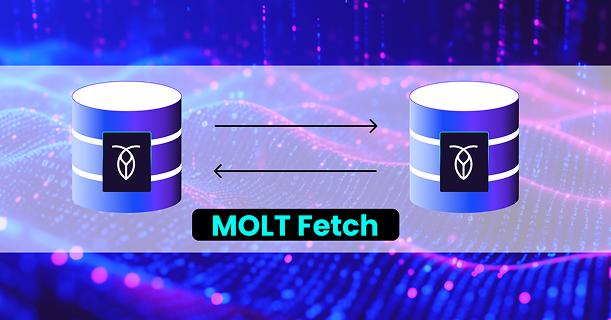
Uses MOLT (Migration Off Legacy Technology) Toolkit & change data capture (CDC): MOLT handles schema conversion/verification and CDC moves data out
Uses mongodump / mongorestore for backup/restore and ecosystem partners such as Kafka Connectors for ETL
Foreign Keys Support
Strong: Enforced across the distributed cluster; guarantees referential integrity
None: References must be resolved manually in application code or via $lookup command (expensive to use)
Auto-Sharding (Dynamic re-sharding online)
Yes - Native & Automatic: Automatically shards data into ranges and dynamically splits, merges, and rebalances online across nodes based on load and size
No - Manual / Complex: Requires defining a shard key upfront; changing shard keys (resharding) is possible but is intensive and resource-heavy
Near Zero: Online schema changes, rolling upgrades, and cluster expansion occur without taking database offline
Low: Rolling upgrades supported, but major sharding changes or index builds on large collections can impact availability
Change Data Capture (CDC)
Native (Core): CHANGEFEED command enables scalable, resilient streaming of data changes to Kafka/Cloud Storage
Native (Core): Change Streams watches collections/databases for changes in real time
Joins
Standard SQL: Full support for complex INNER, OUTER, LEFT, RIGHT joins across distributed tables
$lookup (Limited): "Left outer join" equivalent exists but is computationally expensive and difficult to scale across shards
Schema changes
Online transactional schema changes (add/alter columns, indexes, constraints) with near‑zero downtime, designed for always‑on services
Schema flexible at document level, so schema evolution often happens in code; structural changes at scale (e.g., indexes, shard keys) can cause noticeable performance impacts
Query routing
Every node is a gateway to the entirety of the database for unlimited reads and writes in any region. Any node can accept SQL queries; a Distributed Optimizer routes work to the right ranges/replicas based on locality and cost
Mongo S routers and query engine route operations to shards based on shard key; poor key choice can cause scatter‑gather queries and hotspots
Stored Procedures
Mature: PL/pgSQL and other languages such as Python and Perl support deep logic capabilities
Does not use traditional stored procedures; pushes logic into application layer or implements via server‑side JavaScript, triggers, or functions in managed offerings
Triggers & Deferrable Constraints
Supports triggers and deferrable constraints across all deployment models
Atlas Triggers execute logic on database changes in the cloud; Change Streams do the same for self-managed data
Follower Reads
Supports follower/replica reads with Bounded (controlled) Staleness, allowing low‑latency local reads from nearby replicas while keeping strong global ordering
Secondary reads are supported and configurable via read preference; these are inherently eventually consistent and subject to replication lag rather than an explicit staleness window
Developer tools
Robust SQL ecosystem (ORMS, BI tools, SQL clients) plus language‑specific drivers
Vendor-built ecosystem, shell/CLI, GUI tools, and aggregation framework
Developer experience
Familiar to the massive global developer community that knows SQL
Intuitive for JS/Frontend developers but steep learning curve for most others
Storage engine
Pebble: Go-based storage engine inspired by RocksDB, optimized for distributed range scans
WiredTiger: storage engine optimized for document compression and concurrency
Pricing
Commercial Enterprise: Simple, straightforward pricing, plus the ability to tie data to a location to avoid egress costs; free for single-node/dev; Free Community Tier
Freemium / Enterprise: Open source (SSPL); Free Community Edition; Enterprise Advanced and Atlas (Cloud) adds security/management
Freedom
Free to run anywhere and across multiple clouds; Business Source License (BSL) but Source Available; full commercial-grade support directly from CockroachDB
SSPL License: Source Available, but highly restrictive regarding offering MongoDB as a service (not OSI open source-compliant)